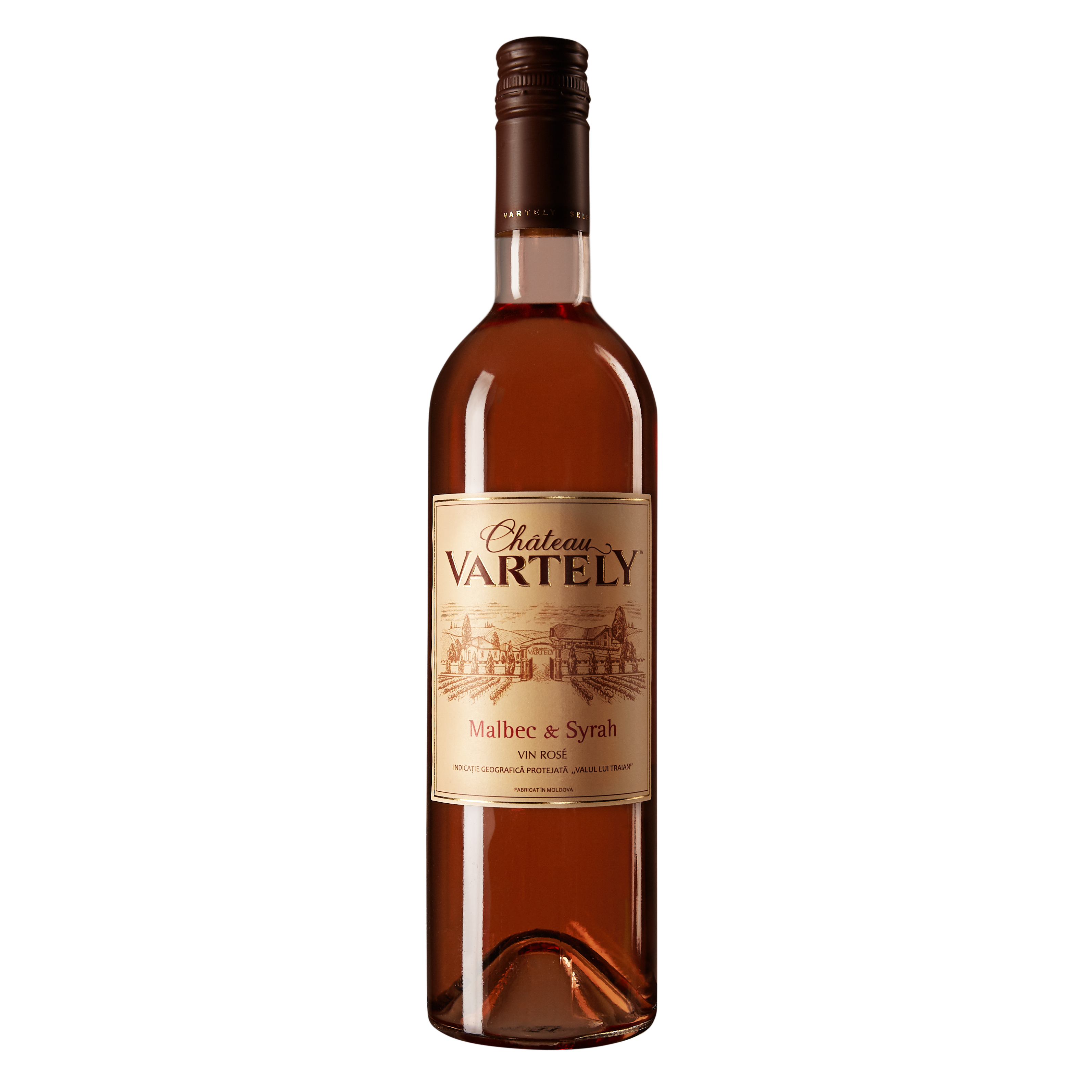
Vintage: 2024
Producer: Cheateau Vartely
Country: Moldova, IGP Valul lui Traian
Grapes: Malbec 50%, Syrah 50%
Alcohol: 12.5%
€8.00
A fresh and expressive rosé with a pale pink color and subtle bronze highlights. Aromas of ripe strawberry and raspberry are complemented by soft creamy notes and a delicate hint of spice.
On the palate, the wine is lively and well balanced, showing bright red berry flavors. Syrah adds a gentle peppery character, while Malbec brings fruit depth and light structure, resulting in a refreshing yet distinctive style.
Château Vartely entered the Moldovan wine market in 1996. From the very beginning, the winery focused on quality and quickly became one of the country’s leading producers.
In 2004, the Château Vartely company was officially established. This marked an important step toward international markets and export-oriented production. Soon after, the winery began receiving awards at major international wine competitions, confirming its growing global recognition.
The estate is located approximately 50 kilometres north of Chișinău, near the historic wine town of Orhei. This area has a long tradition of premium viticulture.
Château Vartely farms a total of 550 hectares of vineyards. These are divided between two of Moldova’s most important wine regions: Codru and Bugeac (IGP Valul lui Traian). This allows the winery to work with different climates, soils, and vineyard conditions, carefully selecting the best sites for each grape variety.
Annual production exceeds 4.5 million bottles. The portfolio combines indigenous Moldovan grape varieties with well-known international cultivars. Winemaking is focused on balance, varietal expression, and regional character.
In 2008, Château Vartely expanded its activities with the opening of a wine tourism complex. Inspired by traditional Moldovan architecture, the complex is integrated into the vineyard landscape. It offers cellar visits, guided tastings, and gastronomic experiences.
Today, Château Vartely brings together scale, technical expertise, and terroir diversity. The wines are consistent, expressive, and firmly rooted in Moldova’s leading wine regions.
The IGP Valul lui Traian wine region, situated in southern Moldova, is defined by a complex geological structure that plays a decisive role in the style and quality of its wines.
The dominant soils are calcareous chernozems, formed over limestone bedrock, with varying proportions of clay, sand, and marl. These soils are moderately fertile, promoting balanced vine vigor and naturally limiting yields.
The warm continental climate, moderated by proximity to the Black Sea basin, interacts with these soils to extend the ripening cycle. Day–night temperature variation supports phenolic maturity without loss of freshness, while soil heat retention accelerates ripening early in the season and stabilizes it later.
These soil conditions favor:
As a result, wines from Valul lui Traian often show ripe black and red fruit profiles, savory spice, firm yet polished tannins, and a saline–mineral finish, reflecting the region’s calcareous foundations.
Château Vartely’s careful parcel selection within Valul lui Traian allows each variety to express the nuances of these soils, translating geological diversity into wines of depth, structure, and clear regional identity.
WhatsApp us